

Thomson problem solution: Proven method reveals insights
The Thomson problem solution has taken a significant leap forward with the discovery of tiny gold particles in helium droplets. This innovative approach may finally unravel the complexities surrounding this century-old mathematical conundrum.
Understanding the Thomson Problem
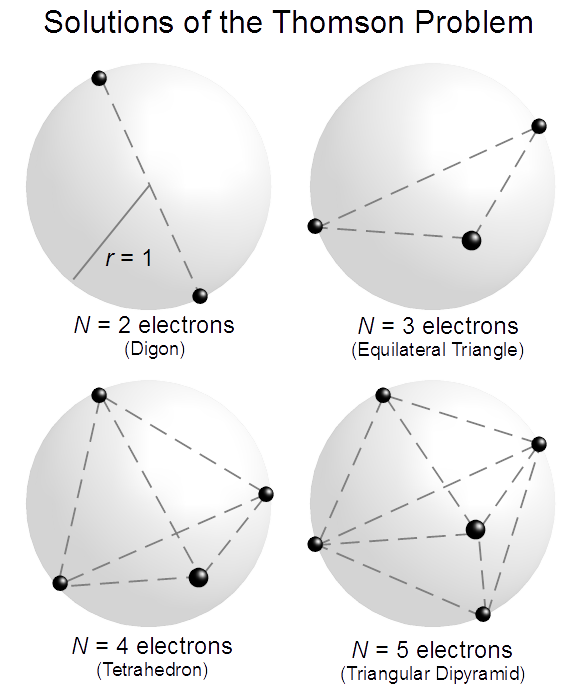
The Thomson problem, a long-standing challenge in physics and mathematics, explores the arrangement of charged particles on a sphere. This intricate problem has puzzled scientists for over a century, primarily due to its complex nature and the variations in potential energy configurations.
Recent advancements have shed light on the Thomson problem solution through innovative experiments involving tiny gold particles suspended in a helium droplet. These experiments have provided new insights into particle interactions and energy minimization, leading to potential breakthroughs in understanding the dynamics of charged systems.
Researchers have noted the significance of these findings, stating that the application of this proven method not only helps in solving the Thomson problem but also opens avenues for further exploration in fields such as nanotechnology and materials science. The implications of these discoveries could reshape our approach to studying charged particle systems.
The Role of Gold Particles
The recent study highlights the significant role of gold particles in addressing the challenges of the Thomson problem solution. Researchers discovered that tiny gold nanoparticles, when suspended in a helium droplet, exhibit unique properties that enhance the understanding of the problem.
These gold particles mimic the behavior of charged particles, allowing scientists to observe their arrangement and interactions more closely. This innovative approach has opened new avenues for exploring concepts previously thought to be purely theoretical.
Key insights from the study include:
- Enhanced stability: The helium environment provides a stable medium for the particles.
- Dynamic interactions: Researchers can track the movement and distribution of the gold particles in real-time.
- Practical applications: Findings may extend to fields such as materials science and nanotechnology.
Overall, the use of gold particles represents a groundbreaking advancement in finding a comprehensive solution to the Thomson problem.
Helium Droplets Explained
Helium droplets serve as an innovative medium for exploring the Thomson problem solution. These superfluid droplets can encapsulate various nanoparticles, including tiny gold particles, creating a unique environment for studying atomic arrangements.
The characteristics of helium droplets are essential in the investigation of the Thomson problem, which seeks to determine the optimal configuration of charged particles on a spherical surface. By cooling helium to near absolute zero, researchers can achieve a stable state that allows for precise observation of interactions between gold particles and the droplet.
Key benefits of using helium droplets include:
- Low Temperature: Minimizes thermal agitation.
- Isolation: Provides a controlled environment for experiments.
- Flexibility: Supports various types of nanoparticles.
These properties make helium droplets an invaluable tool in uncovering insights into the Thomson problem solution.
Implications for Future Research
The recent breakthrough in solving the Thomson problem using tiny gold particles in helium droplets presents significant implications for future research. By enhancing our understanding of how these particles interact, researchers can explore new applications in various fields.
Some potential areas of exploration include:
- Nanoscale materials: The insights gained could lead to the development of novel materials with unique properties.
- Quantum computing: Understanding particle interactions may improve qubit stability and performance.
- Biophysics: The methods used in the Thomson problem solution can be applied to cellular structures and processes.
As the research community delves deeper, the implications of the Thomson problem solution may extend beyond theoretical physics, paving the way for practical innovations that impact technology and materials science.
By Tjlafave via Openverse
Sources
Related stories
Israel election stolen: The real implications for Netanyahu · Siemens Energy India management change: Is it a smart move? · India’s Olympic talent hunt: Is it the right approach for success?
